
Weather Conditions
fog, ice, and ICE

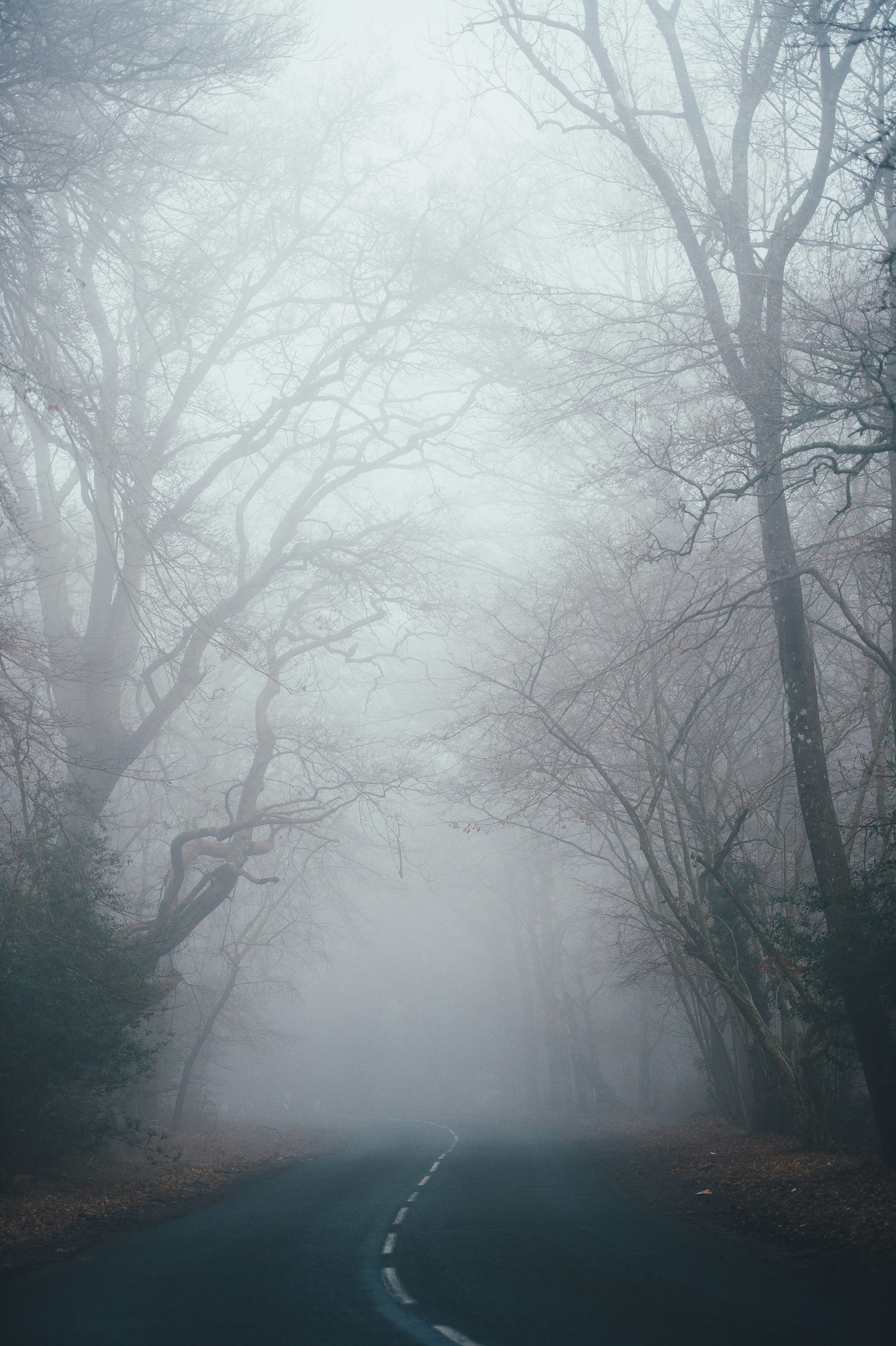
I was planning on resuming posts here with the new moon this weekend, but the weather keeps changing today seemed like a good day to share this.
***
It’s Saturday morning, January 24, and all anyone can talk about is ice.
Lower case, as in Winter Storm, 2026, which is being described as “historical” potentially devastating, destructive, debilitating. The freezing rain and snow that will crescent all the way from Texas, through Shreveport, Nashville, and Charlotte right on up to DC and New York, is also expected to hit the northeast quadrant of Georgia. A not insubstantial swathe of greater metro Atlanta could get shellacked in up to an inch of ice. While the Carolinas are more directly in the storm’s path, our forecast here still threatens conditions that will drop large branches and power lines and make roads unpassable–especially for a population of drivers unused to winter conditions.
Last year I made a cocky misjudgment and chose not to leave work early for my 45 minute commute home when it started “snowing” late afternoon. I have lived and driven in New York, Chicago, and Wisconsin and did not feel threatened by the expected half inch. I learned that evening, that it is not the snow but Atlanta drivers that are in fact the source of threat. By the time I left the office, a moderate snow was falling and the roads were admittedly slick with patches of ice. However, a person dropped unawares–by helicopter maybe–in our midst that evening might have guessed nuclear fallout or zombie invasion for all the cars left deserted and askance on the side of the road, nose first in ditches and creekbeds or struck up against phone poles. I saw box trucks and even semis blocking entire intersections after having slid into awkward, intractable angles. I managed to creep forward through the disorder, avoiding cars that were stalled, drifting, sliding or abandoned and made it home in a slim 3 and a half hours vowing never to underestimate drivers in these parts again.
Suffice to say, Atlantans aren’t ready for a Winter storm of any measure. So, the ice is all anyone’s talked about for the last couple of days and this morning, the drug and grocery stores were crowded and picked bare of bread, milk, fruit and Takis. I smile, while shopping, noticing how shoppers’ behavior is mirroring that of the three mafia squirrels that have taken over the Bird Buddy feeder in my yard. Side-eyeing adversaries that might grab the last tub of mac salad at the deli. Stuffing cheeks full of seed in advance of the incoming freeze. Just a normal Saturday morning storm prep in Atlanta, I think.
The weather that’s been on my mind though, is that of the first full week of the year. Every morning of that week, from January 5th through the 9th, a thick, milky fog held the earth in a possessive embrace. Weekdays, before work, I call myself “writing” but often I am simply nursing a tepid coffee and staring out at the half acre patch of oak and pine woods I call my back yard, watching the light change. Each morning that week, by the time first sunlight winked over the hill of my street, the fog was already set–obscuring all but the nearest, largest and tiptops of the trees. The enchanted forest I saw was mystical, shrouded, soft and still.
Later, on my commute, the fog still clung, cloaking everything between the ground and a one hundred meter reach. Oncoming cars ambushed, their fuzzy headlights emerging out of nowhere, mere feet away. I’d slow to a creep, lest my own front end encounter a bumper before I even see red taillights. It was difficult to keep my eyes on the road; apart from the at times tense driving conditions, the effect of those foggy morning hours was magical. The fog flooded the low places of the rolling hill and valley terrain. It flowed through the mowed and treeless power line channels like a river seeking source. It followed the guiding pull of the creek basins —allowing the water’s path to stretch it into long white fingers. It banked along the two-way highway I take to work in thick blocks, the size of warehouses. It filled the shallow bowl of the field near my house; the short line of Ford and Toyota pickup carcasses along its southeastern boundary disappeared completely in the murk. What is this place, I thought. Where was I?
Normally, the sun heats the ground, and heats the air right above it. That air rises, expands, cools and sinks back down. This creates a vertical cycle of motion that keeps the atmosphere moving. But sometimes that whole structure flips. Ground fog, also called radiation fog and typically a late fall and winter phenomenon in the Georgia Piedmont, forms during long, cool nights as the sun’s heat radiates out and away from the ground, leaving the layer of air just above it cooled to dew point. That cold moisture-heavy air settles in close against the ground. Warm air above it then creates pressure, like a lid, and the moisture in the cold air creates tiny droplets. It’s fog. It’s a cloud. On the ground. The cloud settles in like a blanket in those wee hours and dissipates to nothingness as the sun gains purchase.
I wonder if this flipped structure effect is why fog can feel so otherworldly, so disconcerting. It diffuses light and hides objects from the ground up, giving tree tops, house roofs, or top floors of office buildings the effect of floating islands. As I drove through it, thick as soup each day that week, it prompted astonishment and surprise, I saw the farms and fields anew, but the fog also reflected the unease of not-knowing. It is literally, afterall, a system upside down. I think this fact and effect made its repeated presence that first full week of this new year such an apt metaphor for a transition that–usually well-lit with resolution and good intent– has felt murky with questions, doubt and an inability to see what lies ahead. In my own thoughts that week, the personal and intimate crashed and slid into the collective and the political like cars in an Atlanta snow storm.
What will this year bring? Diagnoses of chronic illness and other health concerns came through the second half of last year for myself and members of my family and have been plucking at worried nerves. How will these unfold, will they rearrange the furniture of my relationships, my sense of self? How will I develop the skillset needed to navigate a broken healthcare system? We need to move. When? Where will we end up? Where am I? Where am I going?
Tap the brakes. Breathe.
And then my brain starts up again: … but our foreign aid infrastructure has been surgically dismantled. PEPFAR has been hobbled! All the millions of small steps and strides forward in science, medicine, education, equity, inclusion–decades in the making are being pushed backwards. I remind myself: I think in cycles. I know nothing is linear. I am aware of the ways Western concepts of progress infect my thinking. I reorient towards emergence and focus on social proofing. But then I remember when I asked my doctor what keeps him up at night and he opened his wallet and showed me a picture of his young daughter and said “Vaccines. Now they are saying ‘Not necessary or even harmful. Soon they will simply say No.” I remember that the justice department is filled with cronies, consumer protections dismantled. And not that I even believe in nation states like that but now allies are enemies, the barbarous and autocratic are friends, good people.
And that Thursday morning, as I drove to work, I listened to news and added Renee Nicole Good’s murder to my thought spiral. She joins Keith Porter, murdered by ICE on New Year’s Eve, in a horrible and growing number. The fog was thick, steel grey, oppressive.
Where are we? What is this place? It’s not the place I thought it was. It’s the place it’s always been.
***
At a time when nearly everyone I know is managing deep personal and collective manifestations of grief (often presenting as rage, by the way), it is ironic that my own griefwork has slowed to a trickle. I’m miserable at self-promotion and have retreated from most of the socials without a backwards glance. Also, truthfully, I’ve been busy enough tending my own grief and that of those closest to me. But I have used fog as a metaphor for grief in my online and peer-to-peer sessions often.
We’ve all been there: autopilot one minute and then unable to see two feet in front of us the next. The transitional space is hard to perceive. Seemingly stone still but always in motion, swirling, creeping, morphing. The fog seems to have no boundaries or borders. What do you do? You put your foot on the brake and slow the fuck down is what you do. And where you were just cruising by on sight alone, now, suddenly,all senses are fired. Your hands clench 10 and 2, your breathing slows and your attention expands outward as you feel your way through the terrain. You listen intently into your surroundings for what’s next, be it a car, a deer, a swift change of direction, or a slippery patch.
When we slow down, breathe, and ground, we can take stock, begin to orient in our grief. That’s how we gain some purchase. That is how we gain clarity. That is how we find one another and avoid crashing.
***
The Georgia Piedmont has not been the only place managing foggy terrain. I’m sitting at my desk, watching the squirrels jockey for the feeder and scrolling live updates. A second protester has been murdered. I stop cold at a photo. Others in the series are crowded with bodies, either taken at arm’s length, in tight frames to communicate the push and force of justified anger or from drone’s height to show the scope and scale of mobilization. Those photos make me proud. I cheer and tear up to see such solidarity in action. A single figure occupies this photo though. It was processed in stark black and white, at mid distance, at the wisp edge of what seems to be a bank of fog. The single figure occupying the frame is that of a man wearing combat boots, thick canvas pants and jacket over a hoody with a military vest snug against his torso and a packed duty belt hanging on his hips. His body leans back, weight on one leg, his masked head tilts towards his right arm which is high in the air. The fog is thick in front of him. It’s hard to imagine he can see very far into it but the image communicates that he understands himself as clearly on one side of it and others…on the other. The photo documents him just as he launches the grenade into the cloud before him. The picture was taken in Minneapolis. The man is an ICE agent. The cloud is made of tear gas, of course, not the tiny moisture droplets of atmospheric inversion, but the sense of systems upside down remains.
The near universal human response to foggy conditions is to slow down, step carefully, look for landmarks and ways to ground our actions, admit we may not be seeing the whole picture. In contrast the man in the photo is all action, moving with muscled strength in aggressive reaction to those which he cannot see: Children, poets, careworkers.
Our storm hit Sunday, January 25th. Where I live, east of Atlanta, driveways and trees are glazed over with a slick of clear ice. Each thin branch drips icicles. It is astonishing. Beautiful and dangerous. I am hoping it deters in some way whatever was planned for the ICE vehicles sighted coming into Atlanta a few days ago. * The cities north and west of us get it worse, many are still without power or digging themselves out from under snow.
And then there’s Minneapolis, smack dab in the middle of the eye of the other ICE storm. The streets there have been foggy with tear gas, but the sun shine bright on Minnesotans, who keep finding their way through the murk–to each other. Their path is clear, their resolve unshakeable. I click to the next picture in the series. Someone, surrounded by other someones who are also poets and teachers, and moms and careworkers, and neighbors, and taxpayers, and voters, carries a hand-lettered sign. “No work, no school, no shopping, ICE out.” Like fog, the working class knows no borders.
I dreamt a couple of nights ago that someone gave me a whistle. It was between my lips when I woke, lungs full of cold air.
***
The agents involved in Alex Pretti’s murder have been put on leave. Greg Bovino has been removed from his post. Politicians are exhibiting discomfort and many are adjusting their stance. The ICE apparatus is not so sure of itself now. Now they are the ones that must tap brakes, get their bearings. Minneapolis is modeling a powerful version and other cities are continuing to build and evolve their own (often long, rich, less publicized) styles, traditions and formations of organizing and resistance. It has worked before. It is working. It will work…as long as we keep finding each other in the fog.
ICE out Everywhere.
ICE out Everywhere.
ICE out Everywhere.
*If the weather didn’t give them pause, maybe the high school kids protesting in Duluth yesterday did. <3
Thank you Monica!! Fog is such a powerful metaphor to describe now, I'll never see fog the same again.